A high performance home begins with design
There is a version of "smart home energy efficiency" that gets sold to homeowners as a solution: a smart thermostat here, an automated shade there, an energy monitoring app on your phone. These things are not necessarily bad or inherently ineffective, but they are not the full answer and they may not get you as far as you’re hoping.
A home that leaks air, has poor insulation, or sits on a slab with no thermal break will still be uncomfortable and expensive to operate, no matter how sophisticated the technology running it. Smart home technology layered onto a poorly performing building envelope is, at best, a bandaid.
High performance home design starts with the building itself.
The envelope is the foundation
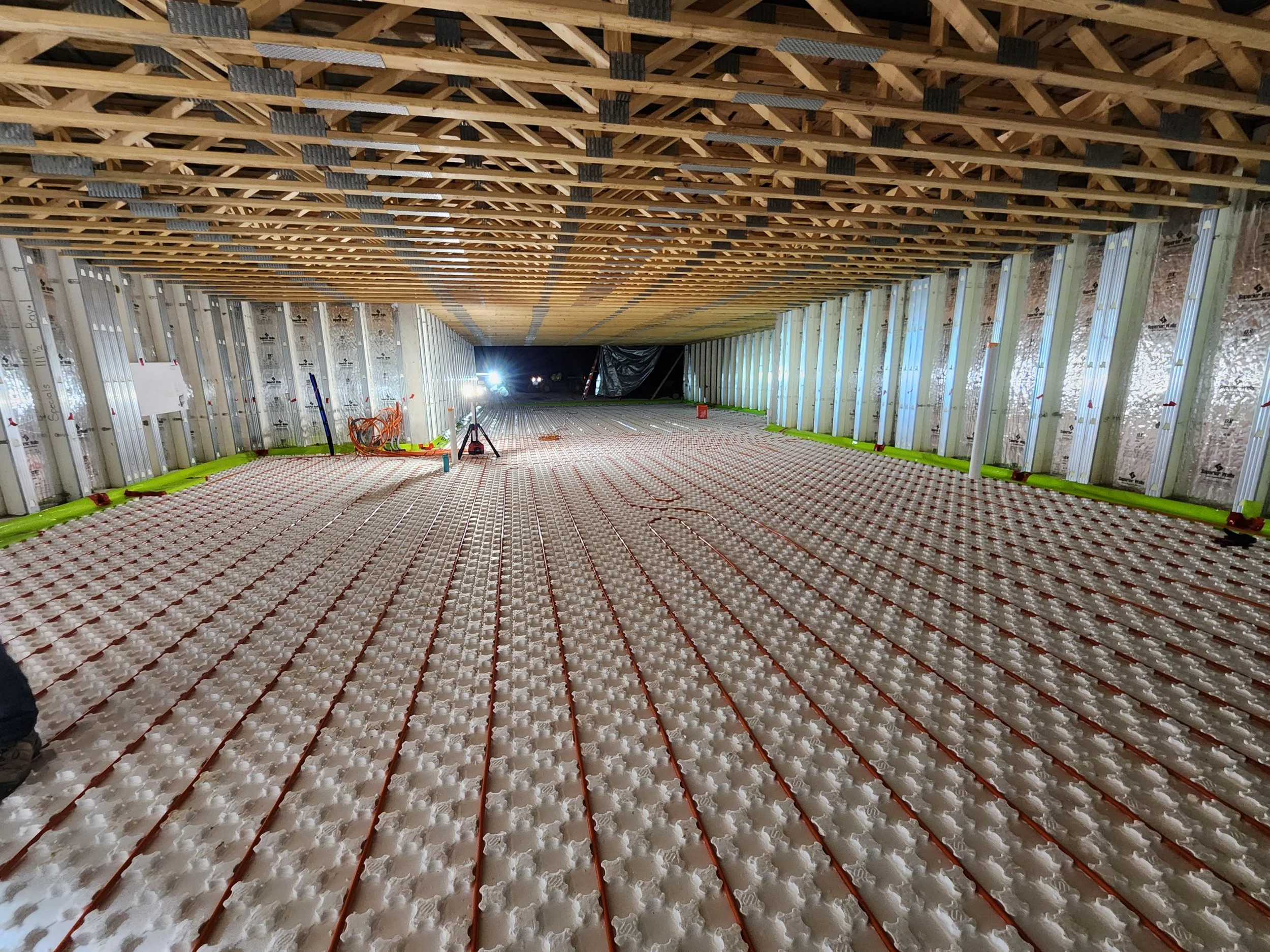
Before any system is selected or any device is installed, the most important decisions are about the building envelope: the walls, roof, foundation, windows, and the connections between them. These elements determine how much energy a home needs in the first place.
Passive House principles offer one of the most rigorous frameworks for getting this right. By prioritizing airtightness, continuous insulation, thermal bridge-free construction, and high performance windows, a Passive House dramatically reduces the load on any mechanical system. You don’t have to target full Passive House metrics to reap the benefits, either. The result is a home that stays comfortable with far less energy, and one where the technology that does get layered in actually has something solid to work with.
Systems come second
Once the envelope is doing its job, mechanical systems can be right-sized rather than oversized to compensate for a leaky building. A smaller, simpler HVAC system in a well-sealed home will outperform a complex system in a conventional one. Energy recovery ventilation brings fresh air in without losing the conditioned air you have already paid for.
This is also where smart home energy efficiency tools become actually useful. A smart thermostat in a high performance home can be a great tool for fine-tuning something that has been designed and built to work efficiently.
What this means for your project
Whether you are building a new custom home, undertaking a significant remodel or addition, or thinking through a commercial tenant improvement, the sequencing matters. Design the building first and get the envelope right. Specify quality windows, continuous insulation, and proper air sealing. Work with an architect and builder who understand that even the best products underperform when installed poorly. Then layer in smart home energy technology.
At Solstice, we draw on Passive House principles, the Pretty Good House framework, and WELL and LEED informed thinking and metrics to design spaces that perform from the inside out.
Solstice Design Studio is a boutique architecture firm with studios in Salt Lake City, UT and Southeast Ohio, offering residential and commercial architecture, high performance design, and Passive House, Pretty Good House consulting. Have a project in mind? We'd love to hear about it - reach out.