
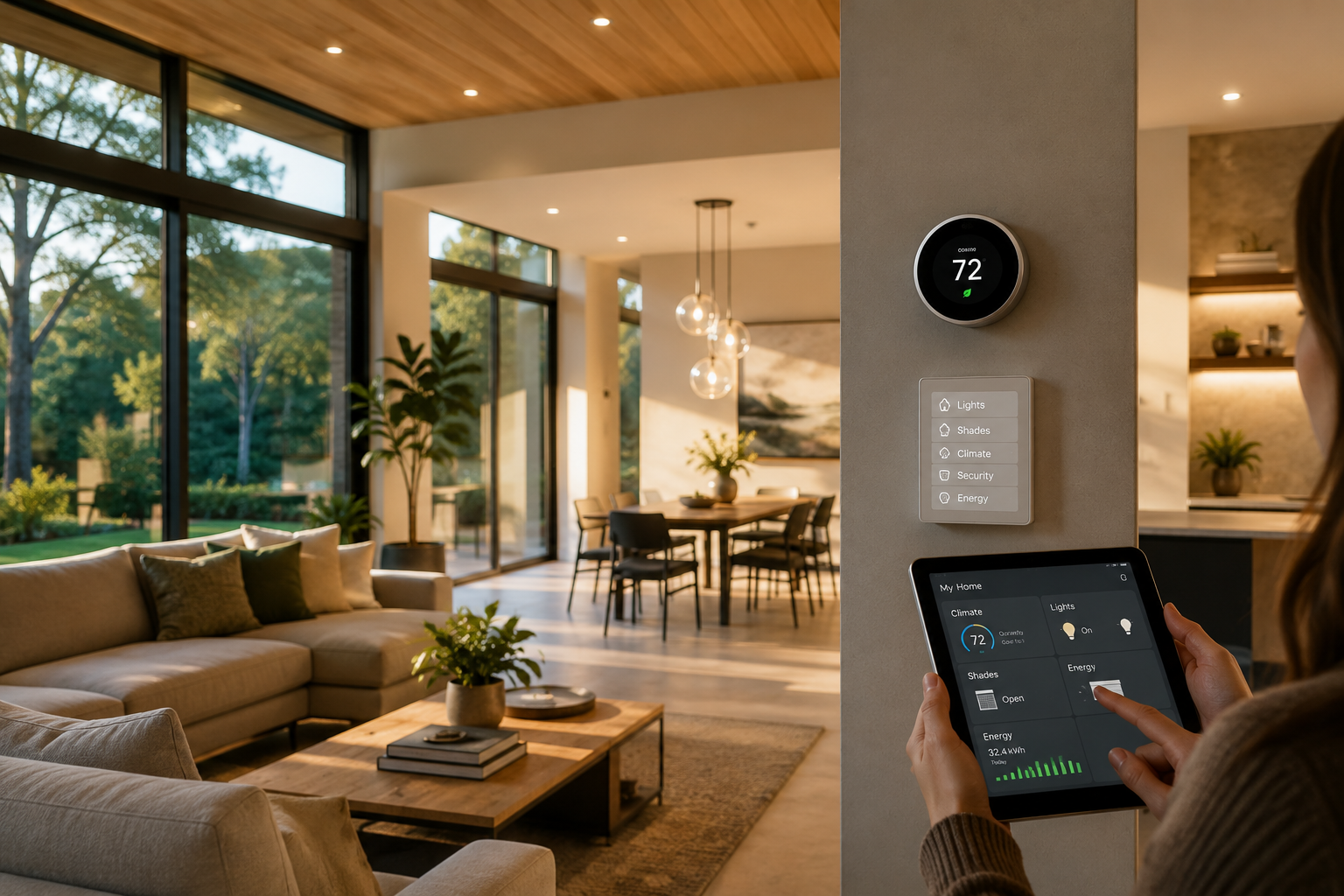
Homeowners today are looking for ways to reduce utility bills while creating living spaces that are comfortable, convenient, and built for the future. Fortunately, advances in smart home energy efficiency make it possible to achieve all three goals. By combining thoughtful architectural design with connected technologies, homeowners can enjoy greater control over energy consumption without compromising daily comfort.
Whether you're building a new home or renovating an existing one, integrating smart features during the planning phase creates opportunities for long-term savings and a better overall living experience. Solstice Design Studio believes that high-performance homes begin with intentional design, where architecture and technology work together to support efficiency and well-being.
What Is Smart Home Energy Efficiency?
Smart home energy efficiency refers to using connected devices and automated systems to manage how a home consumes energy. Rather than relying on manual adjustments, these technologies monitor usage patterns, respond to changing conditions, and optimize performance throughout the day.
Examples include:
Smart thermostats
Automated lighting controls
Connected appliances
Motorized window coverings
Smart ventilation systems
Energy monitoring platforms
When these systems are incorporated into a well-designed home, they create an environment that feels comfortable while minimizing unnecessary energy use.
Smart Thermostats Help Optimize Heating and Cooling
Heating and cooling account for a significant portion of residential energy consumption. Smart thermostats help reduce waste by automatically adjusting temperatures based on occupancy, weather conditions, and homeowner preferences.
Some benefits include:
Learning your daily routine
Adjusting temperatures while you're away
Remote control through mobile devices
Zoned heating and cooling for greater efficiency
Automatic seasonal scheduling
Rather than constantly making manual adjustments, homeowners enjoy consistent indoor comfort while avoiding excessive energy use.
Planning for these systems early allows architects to coordinate HVAC layouts and equipment for maximum performance.
Intelligent Lighting Reduces Electricity Use
Lighting is another area where automation can significantly lower utility costs.
Modern lighting systems can:
Turn lights off in unoccupied rooms
Dim automatically based on natural daylight
Create schedules for indoor and outdoor lighting
Control multiple fixtures from one interface
Integrate with voice assistants and mobile apps
Beyond energy savings, automated lighting adds convenience, enhances security, and creates flexible living environments that adapt to changing needs.
Thoughtful lighting design also maximizes natural daylight, reducing dependence on artificial lighting throughout the day.
Connected Systems Improve Comfort and Convenience
One of the biggest misconceptions about energy-efficient homes is that reducing energy use means sacrificing comfort. In reality, connected technologies often improve everyday living.
Smart systems can coordinate:
Indoor temperature
Humidity levels
Ventilation
Air quality
Lighting scenes
Window shades
Instead of managing each system separately, homeowners experience seamless automation that responds to daily routines and environmental conditions.
For example, automated shades may lower during the hottest part of the day to reduce heat gain while preserving indoor comfort. At the same time, the thermostat can adjust gradually rather than working harder to compensate for rising temperatures.
Energy Monitoring Supports Better Decisions
Many homeowners don't realize how much energy individual systems consume until they begin monitoring usage.
Smart energy monitoring platforms provide valuable information such as:
Daily electricity consumption
Peak energy usage times
Appliance performance
HVAC efficiency
Long-term energy trends
This data allows homeowners to identify opportunities for improvement and make informed decisions that reduce operating costs over time.
Small adjustments based on real-time information often produce noticeable savings without requiring major lifestyle changes.
Smart Design Starts Before Construction
The most effective smart homes begin with careful planning rather than adding technology after construction is complete.
During the design phase, homeowners should consider:
Structured wiring infrastructure
Device placement
Equipment locations
Future technology upgrades
Integrated electrical planning
Network connectivity
Planning ahead reduces installation complexity while creating a cleaner, more organized finished home.
Professionals like Solstice Design Studio help clients integrate these systems into the architectural design so technology complements the home's layout instead of feeling like an afterthought.
Renovations Can Also Benefit From Smart Technology
Existing homes don't have to miss out on modern energy-saving solutions. Many smart features can be incorporated during renovation projects without requiring complete reconstruction.
Popular renovation upgrades include:
Smart thermostats
LED lighting with automated controls
Smart switches
Connected ceiling fans
Smart irrigation systems
Energy monitoring devices
These improvements often deliver immediate convenience while supporting long-term efficiency goals.
For homeowners planning major remodels, working with custom home architects in Columbus OH can help ensure new technologies integrate seamlessly with updated layouts and building systems.
Pair Smart Technology With High-Performance Design
Technology performs best when combined with good architectural design. A poorly insulated home with inefficient windows will still consume unnecessary energy, regardless of how advanced its automation systems may be.
High-performance design strategies include:
Superior insulation
High-efficiency windows
Passive solar orientation
Air sealing
Energy-efficient HVAC systems
Durable building materials
When architecture and smart technology work together, homeowners enjoy greater comfort while reducing long-term utility expenses.
Plan for Future Growth
Technology continues to evolve rapidly. Homeowners should consider systems that allow future expansion rather than limiting upgrades to today's devices.
Flexible planning might include:
Extra electrical capacity
Accessible wiring pathways
Expandable smart home hubs
Additional networking locations
Space for future renewable energy systems
Forward-thinking design protects your investment while making future upgrades easier and more affordable.
Build a Home That Works Smarter
Smart home technology offers far more than convenience. When integrated into a thoughtfully designed home, connected systems improve comfort, reduce energy waste, simplify daily routines, and support long-term cost savings. Combined with quality architectural planning and energy-efficient construction practices, smart features help homeowners create healthier, more sustainable living environments.
Whether you're designing a new custom home or updating an existing property, partnering with experienced professionals can help you make informed decisions that maximize performance. Solstice Design Studio works closely with homeowners to create innovative, high-performance homes that blend beautiful design with lasting efficiency.